Built like a tank” is often bad design
Mar 23, 2026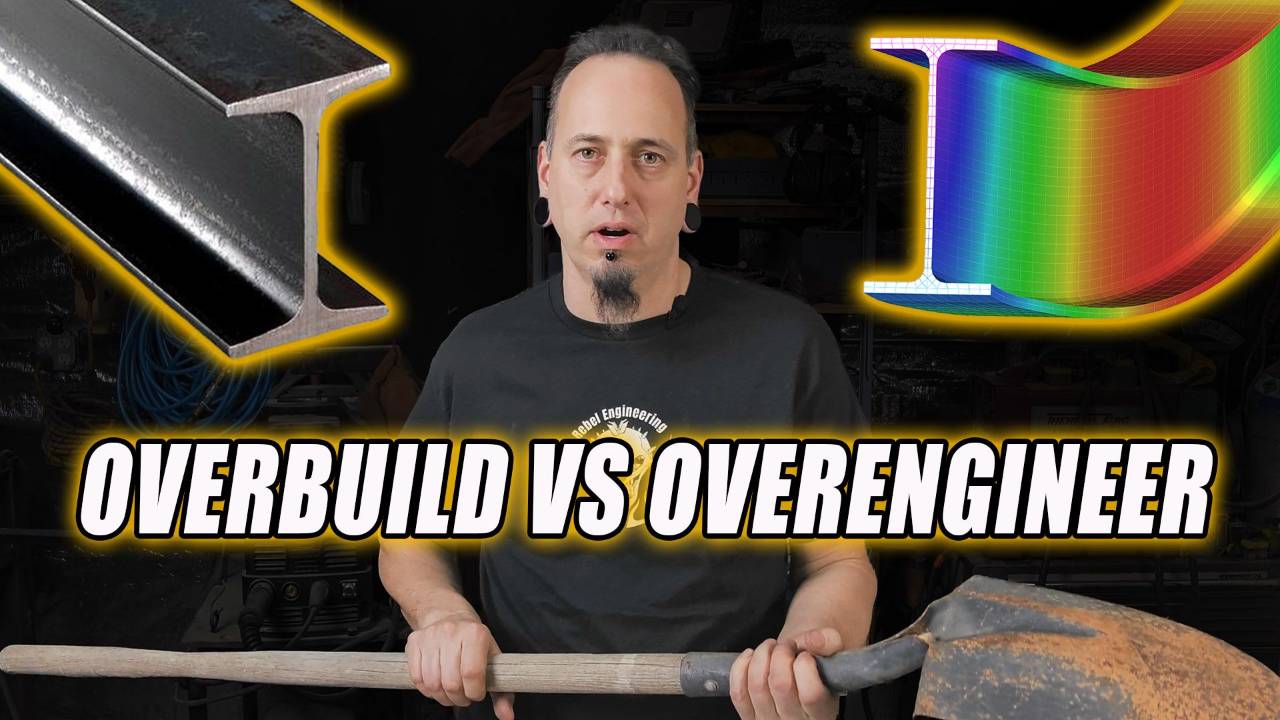
Over coffee, I’ll admit something that usually surprises people. Most products labeled “overengineered” aren’t overengineered at all, they’re overbuilt, and this is often a bad thing.
Early in my career, a fabricator friend got tired of cheap snow shovels breaking and decided to make one that absolutely wouldn’t. He succeeded. It was indestructible… and so heavy he stopped using it almost immediately. Nothing bent, nothing broke, and it stayed in pristine condition because no one wanted to pick it up. The original problem was solved by creating a bigger one.
While fabricators often fall into this trap, engineers are great at making a mountain out of that molehill. We design something incredibly refined, advanced materials, clever mechanisms, extra features, tight tolerances and on paper it looks brilliant. In practice it becomes expensive, fragile, hard to maintain, or simply unnecessary. I’ve owned products that felt like miniature engineering projects every time you tried to use them. Impressive? Maybe. Practical? Not so much.
What decades in product design have taught me is that both extremes miss the point. One product I encountered was so durable it became a burden to move. Another was so sophisticated it felt like you needed training just to operate it. Neither failed because of poor quality. They failed because they ignored how people actually behave in the real world.
The best products I see aren’t heroic feats of engineering. They’re balanced. Simple enough that anyone can use them without thinking. Durable enough to survive normal abuse. Affordable enough to make sense. In other words, they’re designed for intent, not ego, not edge cases, and not marketing headlines.
A surprising number of product failures don’t come from cutting corners. They come from solving the wrong problem too thoroughly, designing for the hypothetical 1% user, or adding features because technically we can. Complexity and mass both carry costs, and users feel those costs immediately.
When I work with teams, the most important conversations usually aren’t about materials or mechanisms. They’re about context. Who is this actually for? How often will it be used? How many will exist? How long does it need to last? Once those answers are clear, the “right” design path tends to reveal itself.
Get those answers wrong, and no amount of strength or sophistication will save the product.
I’m curious how others have seen this play out. What’s a product you’ve used that was clearly overbuilt or overengineered and did it make things better or worse?
Get free access to the resources I put together to help you with the process of bringing a physical product to market: Click Here!